Menu
×
   ❮   
HTML CSS JAVASCRIPT SQL PYTHON JAVA PHP HOW TO W3.CSS C C++ C# BOOTSTRAP REACT MYSQL JQUERY EXCEL XML DJANGO NUMPY PANDAS NODEJS DSA TYPESCRIPT SWIFT ANGULAR ANGULARJS GIT POSTGRESQL MONGODB ASP AI R GO KOTLIN SWIFT SASS VUE GEN AI SCIPY AWS CYBERSECURITY DATA SCIENCE INTRO TO PROGRAMMING HTML & CSS BASH RUST

AWS Cloud Tutorial

AWS HOME AWS Intro AWS Cloud Certification AWS Get Started AWS Cloud Computing AWS Cloud Benefits AWS Infrastructure Intro AWS EC2 Intro AWS EC2 Instance Types AWS EC2 Pricing AWS EC2 Scaling AWS EC2 Auto Scaling AWS Elastic Load Balancing AWS Messaging AWS EventBridge AWS SNS AWS SQS AWS Messaging Comparison AWS Serverless AWS Lambda AWS Containers AWS ECS AWS EKS AWS Fargate AWS Additional Compute AWS Infrastructure AWS Regions AWS Availability Zones AWS Edge Locations AWS Provision AWS Provision Services AWS Elastic Beanstalk AWS CloudFormation AWS Networking AWS Connectivity AWS Subnet and Access AWS Global Networking AWS Global Architectures AWS Storage AWS Instance Stores AWS EBS AWS S3 AWS Elastic File System AWS Storage Comparison AWS Databases AWS RDS AWS DynamoDB AWS DynamoDB vs RDS AWS Redshift AWS DMS AWS Additional DB Services AWS AI/ML Intro AWS AI/ML on AWS AWS AI/ML Services AWS Generative AI Intro AWS Generative AI Services AWS Data Analytics AWS Data Pipelines AWS Cloud Security AWS Shared Responsibility AWS User Access AWS Network Protection AWS Data Protection AWS Detection and Response AWS Monitoring & Governance AWS Monitoring Intro AWS CloudWatch AWS CloudTrail AWS Compliance AWS Auditing AWS Organizations AWS Governance AWS Health AWS Trusted Advisor AWS Pricing and Support AWS Free Tier AWS Pricing Concepts AWS Billing Services AWS Support Plans AWS Marketplace AWS Cost Optimization AWS Migration AWS CAF AWS Migration Strategies AWS Migration Services AWS Database Migrations AWS Data Transfer Online AWS Data Transfer Offline AWS Well-Architected Solutions AWS Well-Architected Framework AWS Specialized Services AWS Specialized Use Cases AWS Cloud Practitioner Wrap Up AWS Exam Preparation

AWS Examples

AWS Cloud Exercises AWS Cloud Quiz AWS Certificate

More AWS

AWS Machine Learning AWS Serverless AWS GenAI

AWS Cloud Computing


What is Cloud Computing?

Cloud computing is the on-demand delivery of IT resources over the internet with pay-as-you-go pricing.

You only pay for what you use, and you can quickly access and scale resources like servers, storage, and databases as needed.


Cloud computing and the Client-Server Model

Cloud computing is built on the client-server model. Your device (the client) sends requests over the internet to remote servers, which process them and return results.
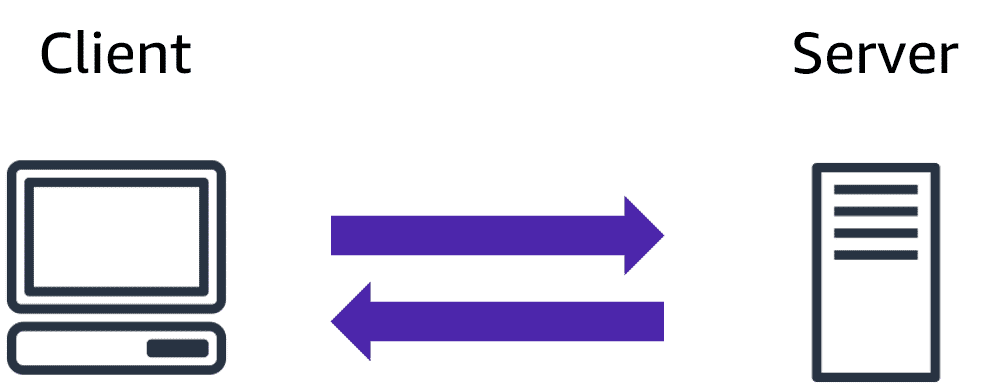
picture of the client-server model

Image created by Amazon Web Services


AWS Cloud Computing Video

W3schools.com collaborates with Amazon Web Services to deliver digital training content to our learners.



AWS and W3Schools offers free and paid Cloud Courses

Engage in a text and video based learning experience.

Free AWS training - Upskill today and reach for the Cloud.

Get started »


Deployment Models

There are three different kinds of deployment models:

  • Cloud-based
  • On-premises
  • Hybrid

These models describe how compute resources are accessed: over the internet, locally, or using a combination of both.

Cloud-Based Deployment

Everything runs in the cloud.

You can build new applications or migrate existing ones, choosing your level of control, from managing virtual servers to using fully managed services.

Example: An application with virtual servers, databases, and networking components all hosted in the cloud.

On-Premises Deployment

Resources run in your own data center using virtualization and management tools.

Also known as private cloud deployment.

Modern virtualization helps maximize hardware utilization and simplifies resource management.

Hybrid Deployment

Connect cloud resources to on-premises infrastructure.

Useful when handling sensitive data or meeting specific regulatory requirements.


AWS Cloud Exercises

Test Yourself With Exercises

Exercise:

Insert the missing deployment model.

Cloud-based, on-premises, and 

Start the Exercise


×

Contact Sales

If you want to use W3Schools services as an educational institution, team or enterprise, send us an e-mail:
sales@w3schools.com

Report Error

If you want to report an error, or if you want to make a suggestion, send us an e-mail:
help@w3schools.com

W3Schools is optimized for learning and training. Examples might be simplified to improve reading and learning. Tutorials, references, and examples are constantly reviewed to avoid errors, but we cannot warrant full correctness of all content. While using W3Schools, you agree to have read and accepted our terms of use, cookies and privacy policy.

Copyright 1999-2026 by Refsnes Data. All Rights Reserved. W3Schools is Powered by W3.CSS.